
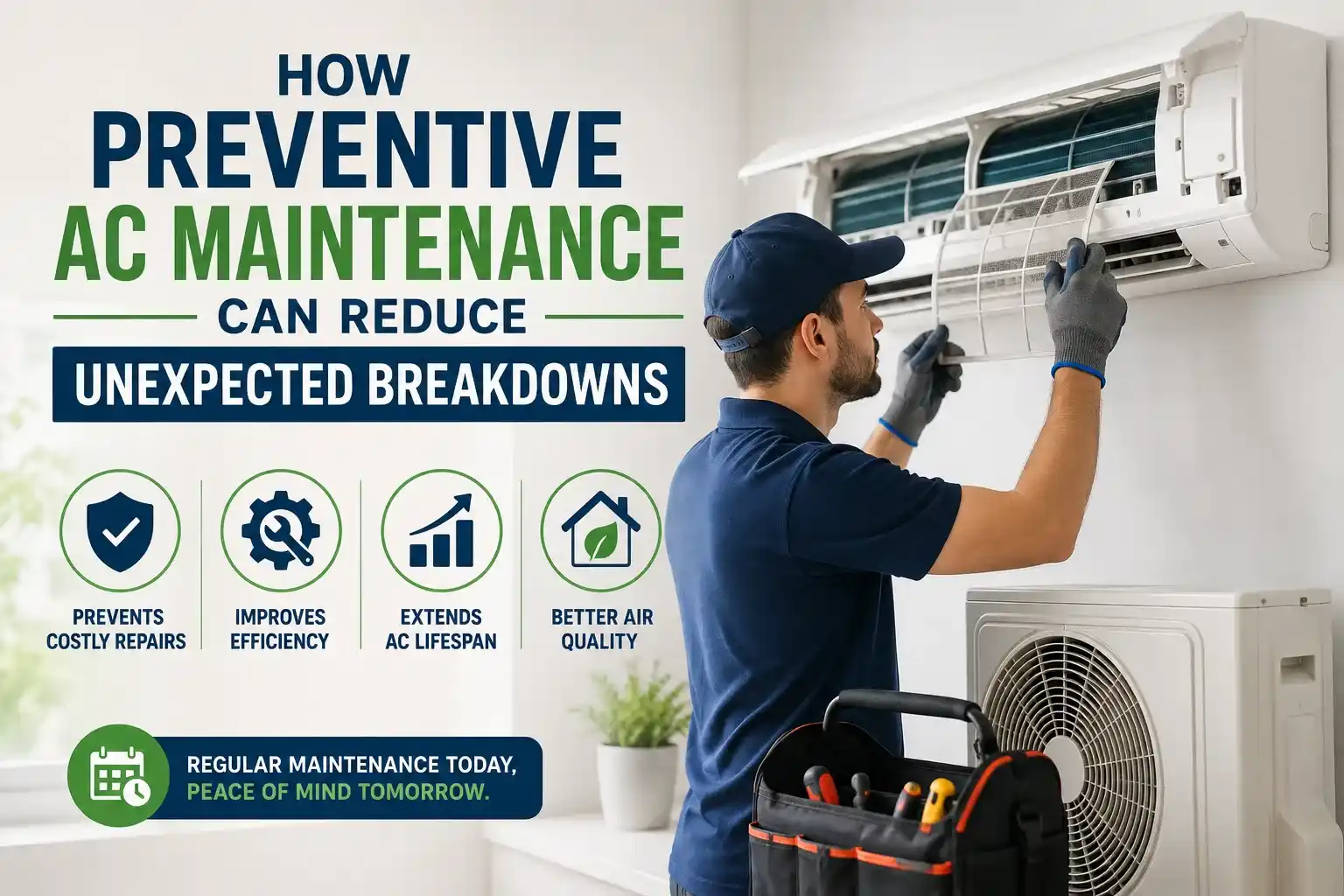

An air conditioning system rarely fails at a convenient time. In hot climates, an unexpected AC breakdown can quickly turn a comfortable home, office, shop, or commercial facility into an uncomfortable environment. More importantly, a small mechanical or electrical issue can develop into an expensive repair when it is ignored for too long.
This is where preventive AC maintenance becomes important. Instead of waiting for an air conditioner to stop working, regular inspections and servicing help identify developing problems before they become major failures.
For property owners and facility managers, preventive maintenance is not simply another routine expense. It is a practical way to improve reliability, maintain cooling performance, and potentially reduce long-term operating and repair costs.
What Is Preventive AC Maintenance?
Preventive AC maintenance involves inspecting, cleaning, testing, and adjusting an air conditioning system at planned intervals. The goal is to keep important components operating within their normal working conditions.
A professional maintenance visit may include checking air filters, evaporator and condenser coils, electrical connections, refrigerant-related components, drainage systems, fans, thermostats, motors, and other critical parts.
The exact maintenance requirements depend on the AC type, usage level, environment, and manufacturer recommendations. A residential split unit used occasionally will not necessarily require the same maintenance approach as an AC system operating continuously in a commercial building.

How Maintenance Helps Prevent Unexpected Breakdowns
1. Small Problems Can Be Detected Early
Many major AC failures begin with relatively minor symptoms.
A loose electrical connection, unusual vibration, restricted airflow, blocked drain, dirty coil, or abnormal motor noise may not immediately stop the system from cooling. However, continuing to operate the unit under these conditions can put additional stress on its components.
During preventive maintenance, technicians can identify these warning signs and recommend corrective action before the problem becomes a complete breakdown.
Early intervention is generally easier and less disruptive than dealing with a failed compressor, damaged motor, or serious electrical fault.
2. Dirty Filters and Coils Reduce System Performance
Air filters and coils have a direct effect on AC performance. When filters become heavily clogged, airflow can become restricted. Dust and debris accumulating on coils can also interfere with heat transfer.
When the system has to work harder to achieve the desired indoor temperature, operating efficiency can decline and certain components may experience additional strain.
Regular cleaning helps maintain proper airflow and heat exchange. This allows the system to operate closer to its intended performance rather than continuously compensating for restricted or inefficient components.
3. Electrical Inspections Can Reduce Failure Risks
Modern air conditioners rely on several electrical components, including capacitors, contactors, wiring, terminals, control boards, and motors.
Electrical components can deteriorate because of heat, age, moisture, vibration, or prolonged operation. A technician performing preventive maintenance can inspect connections and look for signs of overheating, corrosion, damage, or abnormal operation.
Identifying these issues early can help prevent sudden electrical faults and reduce the possibility of more extensive component damage.
Electrical work should always be handled by a qualified AC technician because incorrect testing or repairs can create safety hazards and further damage the equipment.
4. Refrigerant Issues Can Be Identified Before They Become Serious
Refrigerant-related problems can affect cooling performance and system efficiency. A gradual loss of refrigerant, for example, may result from a leak rather than normal consumption.
If the issue is ignored, the AC may struggle to provide adequate cooling while the system continues operating under abnormal conditions.
During maintenance, technicians can evaluate cooling performance and inspect relevant components for signs that indicate a refrigerant problem. If a leak is suspected, it should be located and repaired rather than simply treating refrigerant as something that needs frequent topping up.
Proper refrigerant handling also requires appropriate equipment and technical expertise.
5. Drainage Problems Can Cause Water Damage
Condensation is a normal part of the cooling process. That moisture needs to be collected and drained correctly.
Over time, algae, dust, dirt, or other debris can restrict the condensate drain. A blocked drain may cause water to accumulate inside the unit or leak into the surrounding area.
Regular maintenance can help identify drainage restrictions before they result in ceiling stains, wall damage, unpleasant odors, or damage to nearby electrical components.
For indoor AC units, checking the condensate drain should therefore be an important part of routine servicing.
6. Fan and Motor Problems Can Be Caught Earlier
Fans and motors operate continuously during cooling cycles and are subject to mechanical wear. Bearing problems, unusual vibrations, damaged fan blades, or motor issues can gradually affect performance.
A system may initially continue operating despite these symptoms, but excessive vibration or mechanical resistance can eventually contribute to a more serious failure.
Listening for unusual sounds and checking fan and motor operation during scheduled maintenance gives technicians an opportunity to address developing problems before they cause an unexpected shutdown.
Preventive Maintenance Can Improve Energy Efficiency
An AC system that is poorly maintained may consume more energy because it has to work harder to deliver the same cooling output.
Restricted airflow, dirty coils, inefficient fans, and other maintenance-related problems can increase the workload on the system.
Keeping filters, coils, fans, and other serviceable components in good condition helps the system transfer and distribute cooled air more effectively.
While maintenance alone cannot guarantee a specific reduction in electricity consumption, a properly serviced system is generally better positioned to operate efficiently than one that has been neglected.
Maintenance Can Extend AC Equipment Life
Replacing an air conditioner is a significant investment. Preventive maintenance can help protect that investment by reducing unnecessary stress on critical components.
Regular servicing does not make an AC system immune to age-related failure. Compressors, motors, electrical components, and other parts eventually wear out.
However, identifying problems early, keeping components clean, maintaining proper airflow, and correcting abnormal operation can help the equipment remain reliable throughout more of its useful service life.
This is especially valuable for commercial properties where replacing or shutting down multiple AC units can create considerable operational disruption.
Choosing the Right AC Supplier Matters Too
Maintenance is only one part of responsible AC ownership. When a system requires replacement parts, new equipment, or professional technical assistance, choosing a reliable supplier is equally important.
Property owners searching for an o general ac supplier in sharjah should consider factors such as product availability, technical knowledge, genuine components, warranty support, and after-sales service.
The same principle applies to businesses looking for an o general ac supplier in ajman. A dependable supplier can make it easier to source appropriate equipment and components when maintenance or replacement becomes necessary.
Using compatible and suitable components is important because incorrect parts can affect system performance and reliability.
How Often Should an AC Be Maintained?
There is no single maintenance schedule that works for every air conditioner. Usage conditions make a significant difference.
An AC system operating for long hours in a dusty or demanding environment may require more frequent attention than a lightly used residential unit.
For many systems, professional servicing before periods of heavy cooling demand is a sensible approach. However, the manufacturer’s maintenance recommendations should also be considered.
In addition to professional servicing, property owners should monitor everyday warning signs such as:
- Reduced cooling performance
- Unusual sounds or vibrations
- Water leakage
- Weak airflow
- Unpleasant odors
- Frequent cycling
- Unexpected increases in energy consumption
- Repeated circuit breaker trips
These symptoms do not necessarily indicate the same problem, but they are good reasons to have the system inspected.
Preventive Maintenance vs. Emergency Repair
The difference between preventive maintenance and emergency repair is primarily timing.
With preventive maintenance, the objective is to identify and correct potential problems while the system is still operational. Emergency repair happens after a component has already failed or the system can no longer perform its required function.
Preventive maintenance cannot eliminate every possible breakdown. Components can fail unexpectedly, even on well-maintained equipment.
However, routine inspections can reduce the number of failures caused by neglected filters, dirty coils, blocked drains, loose connections, worn components, and other detectable issues.
Final Thoughts
Unexpected AC breakdowns are not always unavoidable, but many can be reduced through consistent preventive maintenance. Regular inspections allow technicians to detect developing faults, maintain airflow, protect important components, and keep the system operating more efficiently.
Related Reading: The Future of 10 Web Hosting: GCC Trends for 2026
Related Reading: The Future of 10 Web Hosting: GCC Trends for 2026 — full guide
Related Reading: التوازن النفسي: الدليل الكامل