
Introduction
Puppy biting can turn a peaceful walk into a frustrating experience. Many owners struggle when their puppies chase moving feet, grab pant legs, or bite their ankles. Understanding how to stop a puppy from biting ankles and pant legs during walks helps you build safer walking habits.
This behavior is common in young dogs. Puppies explore their surroundings through their mouths. They also chase moving objects because of their natural instincts. However, consistent training can teach your puppy to walk calmly beside you.
The key is to understand why the biting happens. Then, use positive reinforcement, appropriate redirection, and consistent boundaries. With patience, your puppy can learn that walking beside you is more rewarding than grabbing your clothes.
Why Do Puppies Bite Ankles and Pant Legs During Walks?
Before learning how to stop a puppy from biting ankles and pant legs during walks, identify the reason behind the behavior. Puppies bite for several reasons, and each situation may require a different approach.
Excitement and Playfulness
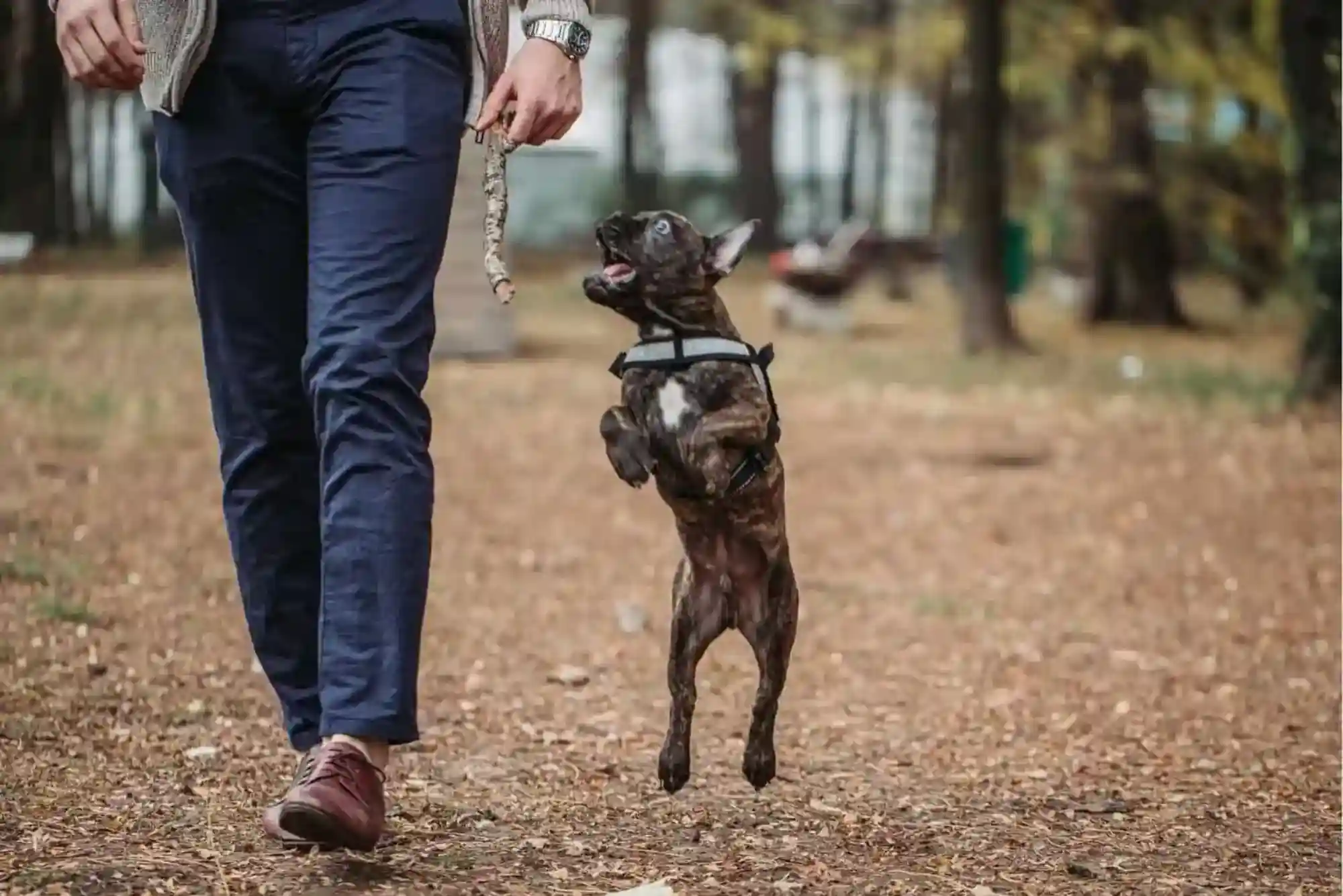
Moving feet often look like exciting toys to puppies. When you walk faster, your puppy may chase your ankles or grab your trousers. This behavior can become a playful game if you react by running, pulling away, or shouting.
Your puppy might not understand that biting clothing hurts. Instead, they may believe you are participating in a fun activity.

Teething Discomfort
Puppies experience teething discomfort as their adult teeth develop. Chewing can help relieve irritation during this period. Consequently, your puppy may seek out pant legs, shoelaces, and other convenient objects.
Providing suitable chew toys can help satisfy this need. However, teething alone does not explain every biting episode.
Overtiredness or Overstimulation
Young puppies need plenty of sleep throughout the day. When they become tired, their ability to control impulses often decreases. Busy streets, unfamiliar smells, and long walks can also overwhelm them.
An overstimulated puppy may suddenly begin biting after walking calmly for several minutes. Shorter walks and regular rest periods can help prevent these episodes.
How to Stop a Puppy from Biting Ankles and Pant Legs During Walks
The most effective approach combines calm responses, reward-based training, and consistent practice. Avoid expecting your puppy to understand the rules immediately. Learning takes repetition, especially in distracting outdoor environments.
Stop Moving When Your Puppy Starts Biting
When your puppy grabs your pant leg, stop walking safely. Keep your body calm and avoid pulling your clothing away dramatically. Quick movements may encourage your puppy to chase and bite harder.
Wait for a brief pause in the biting. Then, encourage your puppy to redirect their attention toward you or an appropriate toy.
Once your puppy releases your clothing, reward the calmer behavior. Resume walking when your puppy can move without grabbing your legs.
If your puppy continues biting, move to a safe, quiet area. Give them an opportunity to settle before continuing.
Redirect Biting Toward an Appropriate Toy
Redirection teaches puppies what they can bite instead. Carry a suitable tug toy or soft dog toy during walks. When your puppy begins targeting your ankles, calmly offer the toy.
Reward your puppy for engaging with the toy rather than your clothing. Keep the toy accessible so you can respond before the behavior becomes intense.
Avoid waving the toy frantically near your legs. This could increase excitement and encourage more jumping. Instead, present it calmly and reward appropriate play.
Reward Your Puppy for Walking Beside You
Positive reinforcement helps puppies understand which behaviors earn rewards. Carry small treats during training sessions. Whenever your puppy walks beside you without biting, praise them and offer a treat.
Initially, reward frequently. You might reward every few steps while your puppy learns the expected behavior. Gradually increase the distance between rewards as your puppy improves.
Practice in quiet areas before introducing busier environments. This makes learning easier because your puppy faces fewer distractions.
Teach a Reliable Attention Cue
An attention cue, such as “look” or your puppy’s name, can redirect focus. Start practicing indoors when your puppy is relaxed.
Say the cue once and reward your puppy for looking toward you. Repeat until your puppy responds consistently.
Next, practice in your garden or another quiet outdoor location. Use the cue when you notice your puppy becoming distracted by your moving feet.
Reward the attention immediately. With practice, your puppy can learn to check in with you instead of chasing your ankles.
What Should You Avoid When Your Puppy Bites Your Clothes?
Your reaction can influence whether the biting continues. Punishment, shouting, and rough handling may increase fear or excitement. They can also damage your puppy’s trust.
Avoid kicking your feet away, pushing your puppy forcefully, or repeatedly pulling clothing from their mouth. These actions may turn biting into a more exciting game.
Do not encourage ankle chasing during play if it causes problems during walks. Instead, establish clear boundaries and use appropriate toys for interactive games.
Consistency also matters between family members. Everyone walking the puppy should follow similar rules. Otherwise, mixed messages can make training slower.
If your puppy becomes highly excited, reduce stimulation rather than demanding perfect obedience. A quiet break may be more effective than repeated commands.
How to Prevent Puppy Biting Before It Starts
Prevention can make walks more enjoyable while supporting better behavior. Observe when your puppy usually starts biting. You might notice a pattern involving particular locations, walking speeds, or times of day.
Plan shorter walks if your puppy becomes overwhelmed easily. Allow time for sniffing, because exploring through scent can provide valuable mental stimulation.
Before leaving home, offer a brief training session or gentle play. However, avoid exhausting your puppy with intense activity. The goal is to begin the walk in a calm, manageable state.
Choose comfortable walking equipment that fits correctly. A well-fitted harness and suitable leash can help you guide your puppy safely without unnecessary pressure.
Bring treats and an appropriate toy whenever possible. These tools allow you to reward good behavior and redirect your puppy before biting escalates.
Finally, make sure your puppy receives enough sleep. Puppies generally need substantial rest, although individual requirements vary by age and activity level.
What If Your Puppy Keeps Biting During Every Walk?
Persistent biting usually means your puppy needs a more structured training approach. Begin by reducing the difficulty of each walk. Choose quieter routes and practice for shorter periods.
If your puppy bites repeatedly, return to a calm environment when it is safe. Give them time to settle, drink water, or rest if needed.
Track when the behavior occurs. For example, note whether biting begins after several minutes, around other dogs, or when the puppy becomes excited. These patterns can help you identify triggers.
Avoid continuing a walk that has become unsafe. If necessary, seek help from a qualified, reward-based dog trainer.
Consult a veterinarian if biting begins suddenly, becomes unusually intense, or accompanies signs of pain or illness. A professional can help identify medical or behavioral concerns that require attention.
Frequently Asked Questions
Why Does My Puppy Bite My Ankles When I Walk?
Puppies often bite ankles because moving feet trigger chasing and play behaviors. Teething, excitement, frustration, and tiredness can also contribute. Observe the circumstances to identify the likely cause and choose an appropriate training response.
How Do I Stop My Puppy from Biting My Pants?
Stop moving when your puppy grabs your pants. Avoid turning the interaction into a chase game. Encourage your puppy to release the fabric, redirect them toward a suitable toy, and reward calm walking.
Should I Ignore My Puppy When They Bite My Legs?
Briefly withdrawing attention can help when biting is playful and your puppy can remain safe. However, ignoring is not always enough. Stop movement, redirect appropriately, and reward alternative behaviors. If the puppy becomes overwhelmed, provide a calm break.
Do Puppies Grow Out of Biting Ankles?
Many puppies improve as they mature and learn impulse control. However, the behavior may continue if it repeatedly earns attention or excitement. Consistent training and appropriate rest help puppies develop better walking habits.
Why Does My Puppy Bite My Legs on Walks but Not at Home?
Outdoor environments contain more movement, smells, and distractions. Your puppy may also become more excited outside. Practice basic walking skills in quiet locations before gradually introducing busier routes.
Conclusion
Learning how to stop a puppy from biting ankles and pant legs during walks requires patience, consistency, and an understanding of your puppy’s needs. The behavior often reflects excitement, teething, overstimulation, or an undeveloped ability to control impulses.