
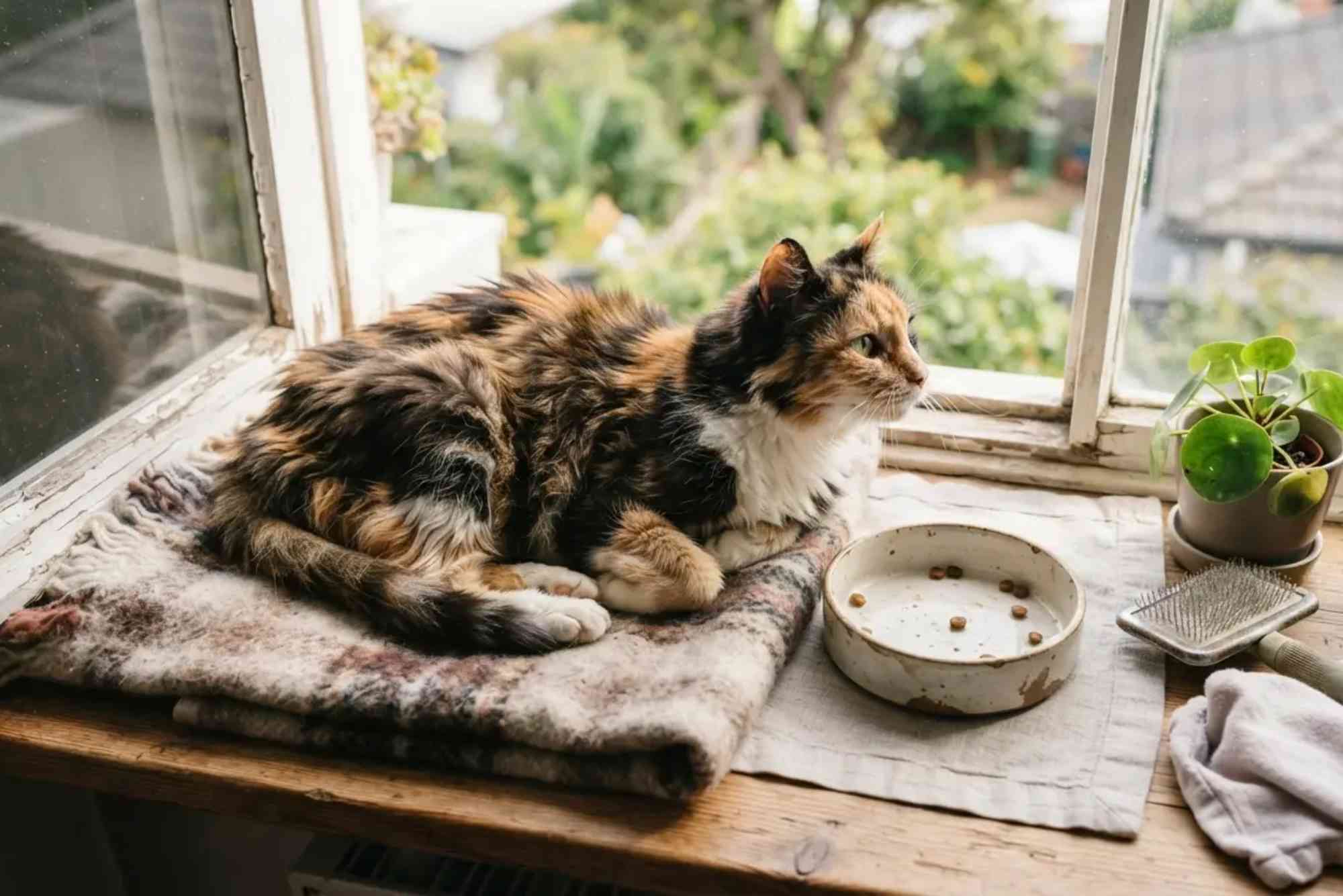

Feline Hyperthyroidism: Weight Loss with Increased Appetite Symptoms and Treatment
Feline Hyperthyroidism: Weight Loss with Increased Appetite Symptoms and Treatment is an important topic for owners of older cats. A cat may eat more than usual yet continue losing weight. This combination can be an early warning sign of thyroid disease.
Feline hyperthyroidism occurs when the thyroid gland produces excessive thyroid hormones. These hormones increase the body’s metabolic rate. As a result, affected cats can burn calories unusually quickly.
The condition is common in middle-aged and older cats. Most cases involve a non-cancerous enlargement of thyroid tissue. However, untreated disease can affect the heart, kidneys, eyes, and other organs.
Understanding Feline Hyperthyroidism: Weight Loss with Increased Appetite Symptoms and Treatment can help owners recognize changes early. Prompt veterinary assessment can improve treatment choices and long-term quality of life.
What Is Feline Hyperthyroidism?
Feline hyperthyroidism is an endocrine disorder caused by excessive thyroid hormone production. The thyroid glands sit in the neck and regulate many metabolic processes.
In most affected cats, abnormal thyroid tissue becomes overactive. Both thyroid lobes are affected in many cats. Thyroid cancer is much less common than benign thyroid disease.

Excess thyroid hormone speeds up metabolism. Therefore, the body may consume energy faster than the cat can replace it through food.
This explains one of the most recognizable patterns. The cat may have a strong appetite while becoming noticeably thinner.
Why Does Hyperthyroidism Cause Weight Loss With Increased Appetite?
Weight loss with increased appetite is a classic feature of feline hyperthyroidism. The explanation is closely connected to metabolism.
Thyroid hormones influence how quickly cells use energy. When hormone levels remain excessive, energy expenditure rises.
The cat may therefore consume more calories while still experiencing a calorie deficit. Muscle and body fat can gradually decrease.
This change may initially be subtle. An owner might notice that the cat feels lighter when being picked up. Later, the ribs, spine, or hip bones may become more prominent.
However, increased appetite is not exclusive to hyperthyroidism. Diabetes, intestinal disease, parasites, and other conditions can also cause weight loss.
Therefore, a veterinary examination is essential before assuming thyroid disease is responsible.
Feline Hyperthyroidism Symptoms to Watch For
The symptoms of feline hyperthyroidism can develop gradually. Some cats show only one or two noticeable changes at first.
Weight loss is one of the most common signs. The cat may continue eating normally or develop an unusually strong appetite.
Increased thirst and urination are also frequently reported. Some cats become more restless, vocal, or active than usual.
Vomiting and diarrhea can occur as the disease progresses. Bowel movements may also become larger or more frequent.
The coat may lose its healthy appearance. It can become greasy, matted, tangled, or generally unkempt.
Some cats develop a rapid heart rate. A veterinarian may also detect a heart murmur or other cardiovascular changes.
A thyroid enlargement may sometimes be felt as a small lump in the neck. However, its absence does not rule out hyperthyroidism.
Common Symptoms and What They May Indicate
| Symptom | What It Can Mean |
|---|---|
| Weight loss | Increased metabolism and energy expenditure |
| Increased appetite | The body is demanding more energy |
| Increased thirst | Possible metabolic or kidney involvement |
| Frequent urination | May occur with hyperthyroidism or another disease |
| Vomiting | Digestive effects of excessive thyroid hormone |
| Diarrhea | Faster gastrointestinal activity |
| Restlessness | Increased metabolic and nervous-system activity |
| Rapid heartbeat | Cardiovascular stimulation |
| Poor coat condition | Common physical change in affected cats |
| Excessive vocalization | Possible behavioral effect of the disease |
These signs should be considered together rather than individually. A veterinarian can determine whether thyroid disease is actually responsible.
How Is Feline Hyperthyroidism Diagnosed?
Diagnosis normally begins with a detailed history and physical examination. Your veterinarian may ask about appetite, weight changes, drinking, urination, activity, and digestive symptoms.
The neck may be examined for an enlarged thyroid gland. Heart rate and blood pressure may also be evaluated.
A blood test measuring total thyroxine, commonly called T4, is central to diagnosis. Most hyperthyroid cats have an elevated T4 level.
However, some affected cats have T4 values within the normal range. This situation can occur when disease is mild or when another illness influences hormone levels.
If suspicion remains high, additional thyroid testing may be recommended. Depending on the case, a veterinarian may also recommend thyroid imaging.
Blood chemistry and urinalysis are particularly important. Hyperthyroidism can coexist with kidney disease, and treating the thyroid condition may reveal previously hidden kidney problems.
Why Kidney and Heart Checks Matter
Feline Hyperthyroidism: Weight Loss with Increased Appetite Symptoms and Treatment involves more than controlling thyroid hormone levels. The disease can influence several body systems.
Excess thyroid hormone increases heart rate and cardiac workload. Over time, this can contribute to heart muscle changes and hypertension.
High blood pressure can damage the eyes, kidneys, brain, and cardiovascular system. Therefore, blood pressure monitoring can be an important part of evaluation.
Kidney disease also deserves careful attention. Hyperthyroidism can increase blood flow through the kidneys and make kidney function appear better than it actually is.
After successful treatment, underlying kidney disease may become more obvious. This is why kidney values and urine concentration should be monitored during treatment.
Feline Hyperthyroidism Treatment Options
Treatment depends on the cat’s health, age, kidney function, lifestyle, and practical circumstances. Veterinarians generally consider medication, radioactive iodine, surgery, or dietary therapy.
The goal is to restore thyroid hormone levels to an appropriate range. Treatment should also address complications such as hypertension or heart disease.
Antithyroid Medication
Methimazole is commonly used to control feline hyperthyroidism. It reduces the production of thyroid hormones.
Medication can be useful when an owner wants a reversible treatment. It can also help stabilize a cat before definitive therapy.
However, medication does not remove the abnormal thyroid tissue. Long-term treatment usually requires regular administration and blood monitoring.
Side effects can include digestive upset, reduced appetite, lethargy, liver problems, blood abnormalities, or facial itching. Serious reactions are uncommon but require prompt veterinary attention.
Veterinarians typically monitor thyroid levels and other blood parameters closely after treatment begins. Monitoring becomes less frequent once the cat is stable.
Radioactive Iodine Therapy
Radioactive iodine therapy is widely considered a preferred definitive treatment. It targets overactive thyroid tissue while limiting exposure to other tissues.
The treatment does not require daily medication afterward in most successfully treated cats. It also avoids the need for thyroid surgery.
AAHA reports that radioactive iodine can cure more than 95% of feline hyperthyroidism cases. Cornell similarly reports high success rates for this treatment.
Availability varies because specialized facilities are required. Temporary hospitalization and radiation-safety procedures are also necessary.
Surgical Thyroidectomy
Surgery removes affected thyroid tissue. It can provide a long-term solution for appropriately selected cats.
However, anesthesia carries additional concerns in older cats. Hyperthyroidism may already have affected the heart or other organs.
Another consideration is the nearby parathyroid tissue. Damage can interfere with calcium regulation.
For these reasons, veterinarians carefully evaluate each cat before recommending surgery.
Iodine-Restricted Dietary Therapy
A prescription iodine-restricted diet can reduce thyroid hormone production. However, strict dietary consistency is essential.
The cat generally must consume the therapeutic diet exclusively. Other foods, treats, table scraps, or prey can provide iodine and reduce effectiveness.
This approach may be useful for cats that cannot receive other treatments. However, its suitability should be discussed carefully with a veterinarian.
What Happens After Treatment?
Recovery depends on the treatment selected and the cat’s overall health. Appetite and activity may gradually return toward normal.
Weight should be monitored regularly. A cat that was severely underweight may need time to regain healthy body condition.
Follow-up blood tests are also important. They help determine whether thyroid hormone levels are controlled without becoming too low.
Kidney function deserves continued monitoring. Blood pressure may also need reassessment, particularly when hypertension was present before treatment.
Owners should report new vomiting, appetite loss, lethargy, weakness, or major behavioral changes. These symptoms can indicate treatment complications or another underlying condition.
Feline Hyperthyroidism: Weight Loss with Increased Appetite Symptoms and Treatment and Daily Care
Owners can support treatment by monitoring their cat closely. Weighing the cat periodically can reveal changes that are difficult to notice visually.
Food intake should also be observed. Sudden appetite changes deserve attention, especially in senior cats.
Medication should be administered exactly as prescribed. Owners should never change the dose without veterinary guidance.
Regular appointments are equally important. Hyperthyroidism can change over time, and treatment requirements may need adjustment.
Resources such as a Small & Exotic Pets Guide can also encourage broader awareness of responsible animal care. However, feline thyroid disease requires advice from a qualified veterinary professional.
Educational communities such as Uaecollector may provide general pet-related information. They should not replace veterinary diagnosis or individualized treatment.
For more specialized background, CatVets Feline Endocrine Disorders can help readers understand why endocrine conditions require careful monitoring. Veterinary guidance remains essential for treatment decisions.
When Should You Contact a Veterinarian?
A veterinary appointment is appropriate when an older cat loses weight without explanation. The concern becomes stronger when weight loss occurs despite increased appetite.
Increased drinking, frequent urination, vomiting, diarrhea, restlessness, or excessive vocalization also warrant assessment.
A rapidly beating heart or breathing difficulty requires particular attention. These signs may indicate significant cardiovascular effects.
Do not wait for severe weight loss before seeking help. Early evaluation can identify thyroid disease and other potentially treatable conditions.
FAQ About Feline Hyperthyroidism
What are the first signs of hyperthyroidism in cats?
Weight loss and increased appetite are among the most recognizable early signs. Increased thirst, urination, activity, vomiting, diarrhea, and coat changes may also occur.
Can a cat have hyperthyroidism and still eat normally?
Yes. Some cats have a normal appetite rather than a dramatically increased appetite. Weight loss can still occur because excessive thyroid hormone increases energy expenditure.
Can hyperthyroidism in cats cause weight loss?
Yes. Weight loss is one of the most common clinical signs. The condition increases metabolism, causing the cat to use energy faster.
How is hyperthyroidism diagnosed in cats?
Veterinarians commonly combine physical examination findings with thyroid hormone testing. Total T4 is a key diagnostic blood test, while additional testing may be needed in uncertain cases.
What is the best treatment for hyperthyroidism in cats?
There is no single best option for every cat. Radioactive iodine is widely considered the preferred definitive treatment when available and appropriate. Medication, surgery, and dietary therapy can also be suitable depending on the individual case.
Can feline hyperthyroidism be cured?
Yes. Radioactive iodine and successful thyroid surgery can provide definitive treatment. Medication generally controls the condition rather than removing its underlying cause.
How long can a cat live with hyperthyroidism?
The outlook is generally good when hyperthyroidism is diagnosed and appropriately treated. Prognosis can be affected by kidney disease, heart disease, hypertension, and other health problems.
Can hyperthyroidism in cats be prevented?
There is currently no guaranteed method for preventing feline hyperthyroidism. The exact cause is not fully understood. Regular veterinary examinations can help identify thyroid disease earlier.
Conclusion
Feline Hyperthyroidism: Weight Loss with Increased Appetite Symptoms and Treatment describes a classic pattern that cat owners should recognize. A cat that loses weight while eating more should not simply be considered a picky eater or naturally thin.
Hyperthyroidism is common in older cats and can affect multiple organs. Fortunately, several effective treatment options are available.
The most appropriate choice depends on the cat’s health, thyroid status, kidney function, lifestyle, and veterinary assessment. With timely diagnosis and appropriate monitoring, many cats can enjoy a good quality of life.
If your cat is losing weight despite having a strong appetite, schedule a veterinary examination and request appropriate thyroid testing. Early attention can make treatment decisions easier and help protect your cat’s long-term health.
Related Reading: Can Dogs Eat Apples, Bananas, and Carrots? Fiber Benefits and Choking Hazard Prevention
Related Reading: Can Dogs Eat Apples, Bananas, and Carrots? Fiber Benefits and Choking Hazard Prevention — full guide