
Introduction
Managing advanced kidney failure in cats requires a dedicated, proactive care strategy. Feline Chronic Kidney Disease (CKD) Stage 3 & 4: Subcutaneous Fluids and Phosphorus Binders represent the core supportive therapies that help maintain hydration, balance electrolyte levels, and prolong a cat’s life. When a cat reaches these advanced stages, the functional capacity of the kidneys decreases significantly, leading to toxin accumulation and severe metabolic imbalances. Understanding how subcutaneous hydration and phosphorus management work together empowers cat owners to deliver compassionate and effective home care.
Understanding Advanced Feline Chronic Kidney Disease
Chronic kidney disease is a progressive condition characterized by the gradual loss of kidney function over time. The International Renal Interest Society (IRIS) categorizes CKD into four distinct stages based on blood creatinine and symmetric dimethylarginine (SDMA) levels.
In Stage 3, kidney function drops below 25%, causing notable clinical signs like increased thirst, frequent urination, weight loss, and reduced appetite. Blood creatinine typically ranges between 2.9 and 5.0 mg/dL. Toxins begin to build up in the bloodstream, leading to mild to moderate uremic nausea.
Stage 4 represents end-stage renal failure, where kidney function falls below 10%. Blood creatinine rises above 5.0 mg/dL, causing severe lethargy, vomiting, persistent nausea, and severe muscle wasting. At this critical juncture, home management focusing on hydration and mineral control becomes essential to maintain life quality.
The Vital Role of Subcutaneous Fluids in Stage 3 and 4 CKD
As kidney function deteriorates, the organs lose their ability to concentrate urine. Cats produce large volumes of dilute urine, which quickly leads to chronic dehydration even if the cat drinks water frequently.
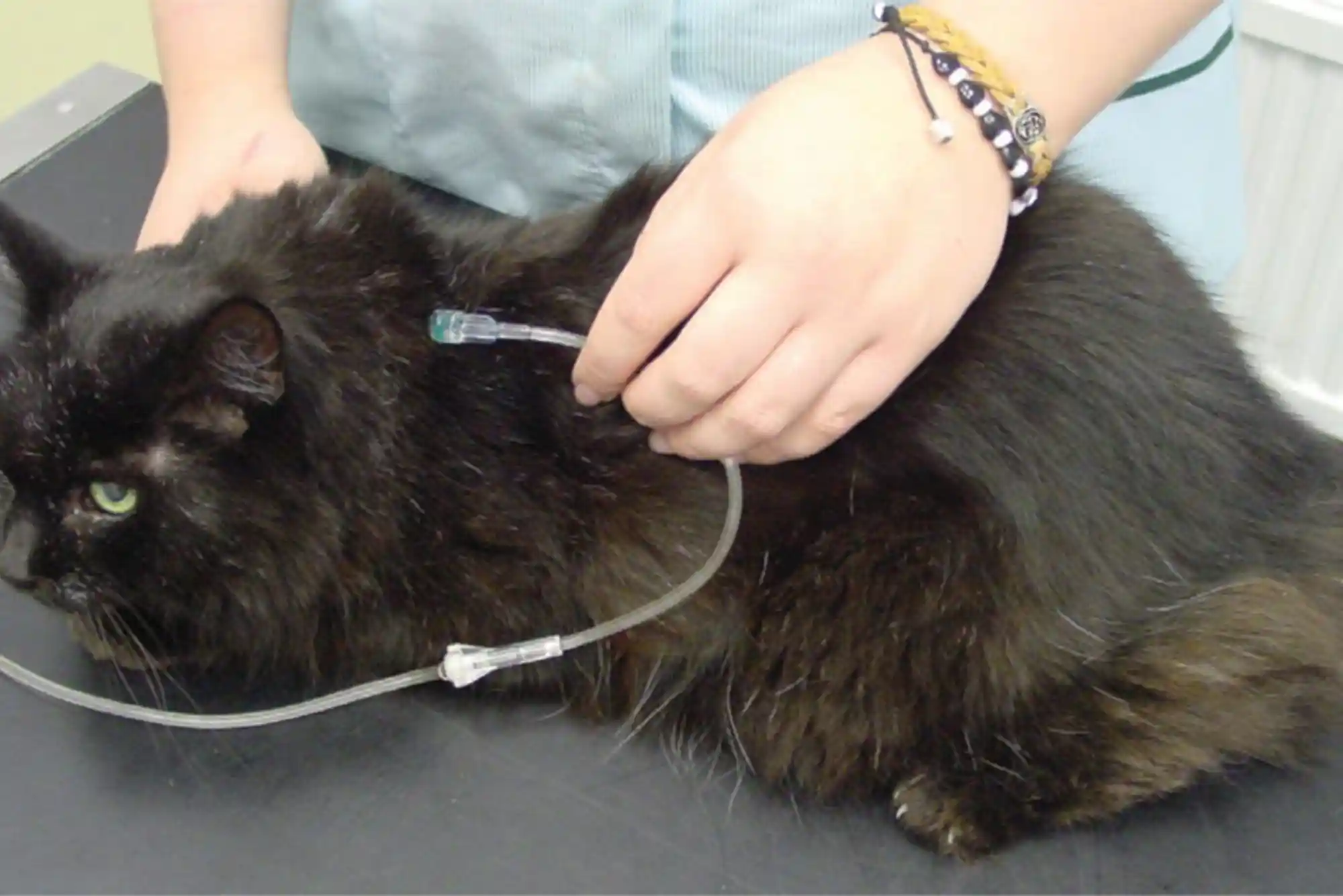
Subcutaneous fluid therapy involves administering balanced electrolyte solutions directly under the loose skin behind the neck or shoulder blades. The fluid forms a temporary pocket under the skin and slowly absorbs into the systemic bloodstream over several hours.

Regular fluid administration restores total body hydration, supports blood flow through the remaining functional kidney tissue, and helps flush out circulating metabolic waste products like blood urea nitrogen (BUN) and creatinine.
Selecting and Administering Subcutaneous Fluids at Home
Veterinarians typically prescribe specific balanced electrolyte solutions such as Lactated Ringer’s Solution (LRS) or Normosol-R for home fluid therapy. Dextrose-containing solutions must be avoided under the skin because they can cause severe tissue irritation and sterile abscesses.
The prescribed volume generally ranges from 100 ml to 150 ml per treatment session, administered every 24 to 48 hours depending on the cat’s size, heart function, and hydration status.
Administering fluids at home requires preparation, gentle handling, and a calm environment. Using an 18-gauge or 20-gauge thin-walled needle speeds up fluid delivery, minimizing the time your cat needs to sit still. Warming the fluid bag in a warm water bath to body temperature makes the experience significantly more comfortable for the cat.
Positioning the cat on a non-slip towel on a comfortable table or lap helps keep them relaxed. Gently tent the loose skin over the shoulder blades, insert the needle bevel-up at a slight downward angle, and open the fluid line completely. Once the target volume is delivered, close the roller clamp, pinch the injection site briefly upon needle removal, and offer a favorite high-value treat.
Monitoring Hydration and Preventing Fluid Overload
While fluid therapy is lifesaving, overhydration poses a serious risk, especially in cats with underlying heart disease or severe anemia. Owners must monitor their cats closely for early warning signs of fluid overload.
Healthy subcutaneous fluid absorption occurs gradually over 6 to 12 hours. If a fluid pocket persists until the next scheduled dose, pause treatment and contact your veterinarian immediately.
Watch for signs of respiratory distress, including rapid breathing, open-mouth breathing, or coughing. Clear nasal discharge, sudden weight gain, or swelling in the paws also indicate fluid buildup in the lungs or body tissues.
Regular physical checks help assess hydration levels daily. Perform a skin tent test over the shoulder blades to see if skin snaps back quickly. Check that the gums remain pink and moist rather than pale, dry, or tacky.
Managing Hyperphosphatemia with Phosphorus Binders
The kidneys play a crucial role in excreting excess phosphorus from the body. As functional nephrons decline in Stage 3 and 4 CKD, phosphorus accumulates in the bloodstream, a condition known as hyperphosphatemia.
Elevated blood phosphorus levels directly cause bone pain, muscle weakness, severe nausea, lethargy, and appetite loss. Furthermore, excess phosphorus triggers secondary hyperparathyroidism, where the body pulls calcium from bones to balance blood chemistry, accelerating kidney tissue damage.
Therapeutic renal diets contain strictly limited phosphorus levels and serve as the first line of defense. However, dietary restrictions alone are rarely sufficient to control blood phosphorus in advanced Stage 3 and Stage 4 CKD.
When blood phosphorus levels remain elevated despite a renal diet, veterinarians prescribe oral phosphorus binders. These medications bind to phosphate molecules present in food within the gastrointestinal tract, forming insoluble complexes that pass safely through the digestive tract in stool.
Types of Phosphorus Binders and Best Administration Practices
Phosphorus binders fall into three primary active categories based on their chemical composition.
Aluminum-based binders, such as aluminum hydroxide, are highly effective and widely used in feline medicine. They bind phosphate efficiently across a wide pH range, though long-term high doses require periodic monitoring to prevent aluminum toxicity.
Calcium-based binders, including calcium carbonate and calcium acetate, effectively lower phosphorus but carry a risk of causing hypercalcemia (excessive blood calcium) when used alongside certain kidney medications.
Lanthanum carbonate and chitosan-based binders offer palatable alternative options for sensitive cats that refuse aluminum or calcium preparations.
Timing is critical for phosphorus binder efficacy. Binders must be thoroughly mixed directly into meals or administered immediately before feeding. If given on an empty stomach, the binder has no dietary phosphate to bind and becomes entirely ineffective.
If your cat is a grazer that eats small amounts throughout the day, mix the binder evenly into the total daily food portion. For cats taking other oral medications, space those medications at least two hours apart from phosphorus binder doses to prevent decreased drug absorption.
Combining Fluids and Binders into a Daily Care Routine
Integrating subcutaneous fluid therapy and phosphorus binders into a smooth daily schedule minimizes stress for both you and your cat. Consistency helps cats accept treatments as part of their standard routine.
Morning schedules often work best for administering oral phosphorus binders with food, as cats are typically hungriest after waking up. Ensure food is fresh and well-mixed with the binder powder or liquid.
Subcutaneous fluid sessions can be scheduled during quiet evening hours when the household is calm. Establishing a dedicated, cozy workspace with soft blankets and relaxing music creates a comforting association for your cat.
Keep a daily log tracking fluid volumes administered, binder doses given, food intake, body weight, and general activity levels. Detailed documentation helps your veterinary team make precise adjustments during follow-up exams.
Frequently Asked Questions
How long can a cat live with Stage 3 or Stage 4 CKD?
Cats with Stage 3 CKD can live anywhere from several months to several years with dedicated supportive care, including subcutaneous fluids, renal diets, and phosphorus binders. Stage 4 CKD carries a more guarded prognosis, with survival times ranging from a few weeks to several months depending on the cat’s response to treatment and overall stability.
How do I know if my cat needs phosphorus binders?
Your veterinarian will determine the need for phosphorus binders through routine blood chemistry panels. If your cat’s serum phosphorus levels exceed the IRIS target guidelines for their specific stage (above 5.0 mg/dL in Stage 3 or above 6.0 mg/dL in Stage 4) despite eating a renal diet, phosphorus binders are necessary.
Can subcutaneous fluids cause heart failure in cats?
Subcutaneous fluids do not directly cause heart disease, but administering excess fluid volume to a cat with hidden or diagnosed heart disease can trigger fluid overload and congestive heart failure. Always follow your veterinarian’s precise dosage recommendations and monitor your cat’s breathing rate closely at home.
What if my cat refuses to eat food mixed with phosphorus binders?
If your cat detects the binder and refuses meals, never force the issue, as skipping meals leads to hepatic lipidosis and worsening weakness. Try mixing the binder with small amounts of strong-smelling food toppers, switching to a different flavorless binder formulation, or asking your veterinarian about compounding oral liquids or treats.
Conclusion
Managing advanced kidney disease requires patience, consistency, and attentiveness to your cat’s evolving physical needs. Feline Chronic Kidney Disease (CKD) Stage 3 & 4: Subcutaneous Fluids and Phosphorus Binders serve as foundational pillars that maintain hydration, reduce toxicity, and protect against painful metabolic imbalances. By mastering proper fluid administration techniques, giving binders with meals, and monitoring subtle changes in your cat’s behavior, you can significantly enhance your cat’s daily comfort. Partner closely with your veterinary team to tailor a supportive care plan that offers your beloved companion the highest quality of life possible. If you suspect your cat is showing signs of advancing kidney disease, schedule a comprehensive veterinary evaluation and blood panel today.