
Introudction
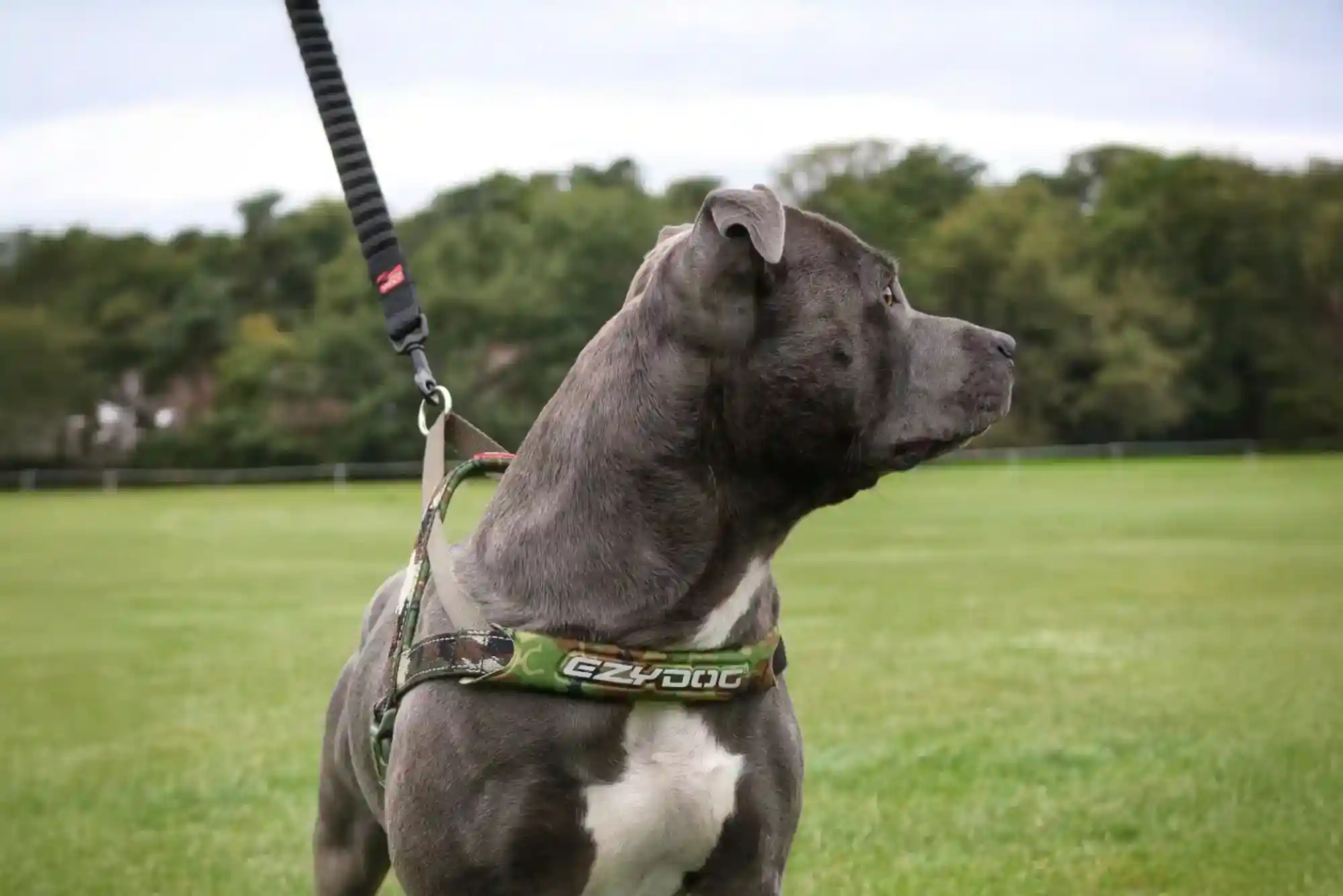
Walking a powerful dog should be enjoyable, not a constant struggle. Pitbulls, Boxers, and other strong breeds can pull with surprising force, especially when they spot another dog, a squirrel, or something exciting across the street. A standard walking harness may not provide the control, durability, or secure fit needed for these situations.
The best heavy duty no-pull harnesses for Pitbulls, Boxers, and strong pullers combine sturdy construction, comfortable padding, adjustable straps, and leash attachment points that help owners manage pulling more effectively. However, choosing the right harness involves more than selecting the thickest material or the strongest-looking buckles. The design must fit the dog’s body, distribute pressure appropriately, and allow natural movement.
In this guide, we’ll explore leading harness options, explain which features matter most, and help you choose equipment that suits your dog’s strength, temperament, and walking habits. Whether you’re training a young Pitbull or managing an energetic adult Boxer, the right harness can make everyday walks safer and more comfortable.
Why Heavy Duty No-Pull Harnesses Matter for Strong Dogs
Strong dogs need walking equipment that can withstand repeated tension without rubbing, slipping, or opening unexpectedly. Heavy duty no-pull harnesses are designed to provide a more secure connection between the dog and handler while improving control during walks.
A well-designed harness also offers advantages over attaching a leash directly to a collar. When a dog suddenly lunges, a collar can concentrate pressure around the neck. A properly fitted harness distributes pressure across the chest and torso, although the exact effect depends on its construction and how the dog pulls.
Better Control Without Excessive Neck Pressure
Many no-pull harnesses include a front leash attachment near the chest. When a dog pulls forward, the leash angle can help redirect its body toward the handler. This makes it easier to interrupt a pulling pattern without relying entirely on arm strength.

Front-clip designs are particularly useful during training, but they are not a substitute for teaching loose-leash walking. Dogs can still pull against a harness, so consistent reinforcement and suitable handling remain important.
Durability for Powerful Breeds
Pitbulls and Boxers often have muscular builds that require careful attention to fit. Strong pulling can place considerable stress on stitching, adjustment points, webbing, and metal rings.
Look for reinforced seams, reliable buckles, abrasion-resistant webbing, and leash rings designed for everyday walking. Heavy duty construction should improve reliability without making the harness unnecessarily bulky or restrictive.
Comfort During Everyday Adventures
A strong harness should feel secure without digging into the armpits or restricting the shoulders. Breathable materials, smooth edges, and adequate adjustment help prevent rubbing during longer walks.
Comfort is especially important for Boxers, which may have deep chests and muscular shoulders. Pitbull-type dogs can also vary considerably in neck width, chest depth, and overall proportions, so breed labels alone cannot determine the correct size.
Best Heavy Duty No-Pull Harnesses for Pitbulls, Boxers, and Strong Pullers
The following options are worth considering for different walking and training needs. Product designs, sizing, and features can vary by model and generation, so confirm the exact specifications before purchasing.
Ruffwear Front Range Harness: Best for Everyday Comfort
The Ruffwear Front Range Harness is a strong candidate for owners who prioritize comfortable everyday walks. It features padded construction, adjustable straps, and front and back leash attachment options.
The front attachment can help manage moderate pulling, while the back attachment works well for dogs that already walk calmly. Its padded design is useful for regular neighborhood walks and outdoor adventures.
Although it offers dependable everyday functionality, it is not necessarily the best choice for every exceptionally powerful puller. Owners should inspect the fit carefully and consider a more specialized design if their dog regularly lunges with significant force.
2 Hounds Design Freedom No-Pull Harness: Best for Training
The 2 Hounds Design Freedom No-Pull Harness is designed specifically to assist with pulling management. Its construction includes a front leash attachment and a distinctive design that works with its compatible training leash.
The front attachment helps redirect a dog when it moves ahead, while the harness’s multiple adjustment points support a more customized fit. This can be particularly useful for muscular dogs whose proportions do not match standard sizing charts.
The Freedom harness is best viewed as a training aid rather than a device that automatically stops pulling. Owners should introduce it gradually and reward their dogs for walking with a loose leash.
PetSafe Easy Walk Harness: Best for Learning Loose-Leash Walking
The PetSafe Easy Walk Harness is a popular option for owners who need help managing pulling during training. Its front-chest leash attachment encourages redirection when a dog moves forward against the leash.
Its relatively lightweight construction may appeal to dogs that dislike bulky equipment. It can also be useful for owners who want a straightforward design without excessive padding or complicated straps.
However, a lightweight harness is not automatically the ideal choice for every strong dog. Check the manufacturer’s sizing guidance, examine the hardware, and assess whether the harness remains secure when the dog changes direction suddenly.
Rabbitgoo No-Pull Dog Harness: Best for Feature Variety
Rabbitgoo offers several harness models with adjustable straps, padded panels, reflective details, and front and back leash attachment points. Some versions also include a top handle for additional assistance when guiding a dog through a crowded area.
These features can be convenient for owners of energetic Pitbulls and Boxers. Adjustable construction is particularly valuable when a dog falls between standard sizes or has a broad chest.
However, Rabbitgoo sells multiple designs, and their construction is not identical. Compare the specifications of the exact model rather than assuming every version provides the same strength, fit, or control.
Julius-K9 IDC Powerharness: Best for Robust Everyday Use
The Julius-K9 IDC Powerharness is known for its sturdy construction, adjustable chest strap, and practical handle. It is worth considering for owners who want a durable harness for daily activities.
The handle can help with brief, controlled assistance, such as guiding a dog through a narrow passage. It should not be used to lift a heavy dog by the harness unless the manufacturer explicitly approves that use.
One important consideration is leash attachment placement. The standard IDC Powerharness primarily uses a back attachment, so it does not provide the same front-clip redirection as dedicated front-clip no-pull designs. Owners dealing with persistent pulling may need a different model or an additional training approach.
Blue-9 Balance Harness: Best for Adjustable Fit
The Blue-9 Balance Harness is designed around adjustability, making it a useful option for dogs whose body shapes are difficult to accommodate. It offers multiple adjustment points and front and back leash attachment options.
This flexibility can help owners position the straps more accurately around a muscular chest and shoulders. A properly adjusted harness should remain stable without pressing into the dog’s armpits or interfering with its stride.
The Balance Harness is not simply a matter of tightening every strap as much as possible. Owners should follow the fitting instructions and check the harness periodically, particularly if the dog’s weight changes or the webbing shifts during walks.
How to Choose a Heavy Duty No-Pull Harness
The right choice depends on your dog’s pulling behavior, body shape, training progress, and walking environment. A harness that works well for one muscular dog may fit another poorly.
Choose the Right Leash Attachment
Front-clip harnesses are often useful when pulling is the primary problem because the attachment point can help redirect forward movement. Back-clip harnesses generally allow more natural forward movement and may suit dogs that already walk calmly.
Some harnesses offer both options, allowing owners to adjust their approach as training progresses. However, a dual-clip design is only helpful if the harness fits securely and the attachment hardware is suitable for the dog’s size and strength.
Prioritize Strong Materials and Reliable Hardware
Inspect the stitching around leash rings, adjustment sliders, and buckles. Reinforced webbing and quality metal hardware can improve durability, but appearance alone cannot establish a harness’s safe working load.
Check whether the manufacturer publishes load guidance or restrictions. Do not assume a product is escape-proof, chew-proof, or suitable for every large dog simply because it is marketed as heavy duty.
Measure Your Dog Before Buying
Chest girth is often the most important measurement when choosing a harness. Measure around the widest part of the rib cage, usually just behind the front legs, and compare the result with the specific manufacturer’s size chart.
Some models also require neck measurements or weight information. If your dog falls between sizes, follow the manufacturer’s recommendations instead of automatically choosing the larger option.
After putting the harness on, check that it stays in position when your dog turns and walks. You should be able to fit the recommended number of fingers beneath the straps, according to the manufacturer’s fitting instructions, without the harness being loose enough to slip over the dog’s head.
Consider Shoulder Movement and Padding
The straps should not cut across the shoulder joints or rub behind the front legs. A harness that looks secure while the dog stands still may shift or restrict movement once the dog starts walking.
Padding can improve comfort, but excessive bulk may trap heat or reduce freedom of movement. Choose a design that balances durability, ventilation, and an appropriate fit for your dog’s build.
Common Mistakes to Avoid When Buying a No-Pull Harness
One common mistake is buying a harness based only on breed recommendations. Pitbulls and Boxers can have very different proportions, even when they weigh the same. Measurements and an assessment of the actual fit are more reliable than breed names.
Another mistake is assuming that stronger equipment eliminates the need for training. A harness can improve handling, but a determined dog may continue pulling if the behavior has been repeatedly rewarded. Short training sessions, consistent leash handling, and rewards for walking beside you can make a meaningful difference.
Owners should also avoid choosing a harness that is too tight. Over-tightening can cause rubbing and discomfort, while loose straps can allow the dog to twist out of the equipment. Inspect the fit before every walk and check the stitching, buckles, and leash rings for wear.
Finally, never treat a top handle as a guarantee of complete control. A sudden lunge from a powerful dog can still pull an owner off balance. Use suitable leash length, maintain a secure grip, and create distance from triggers when necessary.
How to Train a Strong Dog to Stop Pulling
Even the best heavy duty no-pull harness works best alongside consistent training. Begin in a quiet environment where your dog can focus without constant distractions.
Reward your dog whenever the leash remains loose. If your dog starts pulling, stop moving or calmly change direction when it is safe to do so. Resume walking when the leash relaxes, then reward your dog for returning to a comfortable walking position.
Keep early sessions short and positive. Gradually introduce more distracting environments as your dog becomes more reliable. If your dog reacts intensely to other dogs, strangers, or moving objects, work at a distance where it can still respond to you.
For severe lunging, escape attempts, or handling difficulties, consider assistance from a qualified, reward-based trainer. The goal is to improve both safety and communication rather than relying on equipment alone.
Which Heavy Duty No-Pull Harness Is Best for Your Dog?
The best option depends on how your dog behaves on a leash and how much adjustment its body shape requires.
For dogs that pull hard and need additional redirection, the 2 Hounds Design Freedom No-Pull Harness is worth considering because of its dual-attachment design. For comfortable everyday walks, the Ruffwear Front Range offers padding and front-and-back leash attachment options. Owners seeking a lightweight training harness may prefer the PetSafe Easy Walk, while those prioritizing adjustable fit can consider the Blue-9 Balance Harness.
For dogs that frequently back out of their equipment, a more secure design with an additional strap behind the rib cage may be more appropriate than a conventional two-strap harness. In that situation, consider the Ruffwear Web Master, while remembering that no harness is completely escape-proof.
Choose according to your dog’s individual needs rather than popularity alone. Check current product specifications, sizing guidance, and hardware details before making a purchase.
Find the Right Harness for Safer, Easier Walks
Choosing the best heavy duty no-pull harnesses for Pitbulls, Boxers, and strong pullers means balancing durability, comfort, fit, and effective leash control. The 2 Hounds Design Freedom is worth considering for dogs that need additional redirection, while the Ruffwear Front Range offers a comfortable option for everyday adventures. The Blue-9 Balance and PetSafe Easy Walk also deserve consideration depending on your dog’s fit and training needs.
Remember that even the strongest harness cannot replace proper training. Measure your dog before buying, inspect the hardware regularly, and reward calm walking behavior to build better habits over time.
FAQs
What is the best harness for a Pitbull that pulls?
The 2 Hounds Design Freedom No-Pull Harness is a strong candidate for Pitbulls that pull consistently because its front attachment and rear martingale-style loop help redirect movement. The Ruffwear Front Range is another option for everyday walking. Measure your dog’s chest carefully to ensure a secure, comfortable fit.
Are no-pull harnesses safe for Pitbulls and Boxers?
A properly fitted, well-designed harness can be suitable for both breeds. Choose a model that avoids pressure on the throat, does not restrict shoulder movement, and stays securely positioned during walking. Check the fit regularly and stop using the harness if you notice rubbing, discomfort, or restricted movement.
Is a front-clip or back-clip harness better for strong pullers?
A front-clip harness is generally more useful for managing pulling because it can redirect the dog’s forward movement toward the handler. A back-clip harness is often suitable for dogs that already walk calmly. Some harnesses offer both attachments, providing flexibility as training progresses.
Can a heavy duty harness stop a dog from pulling completely?
No. A heavy duty harness can improve control and make pulling easier to manage, but it does not automatically change a dog’s behavior. Consistent loose-leash training, appropriate rewards, and gradually increasing distractions are essential for long-term improvement.
How do I know what size harness my Pitbull or Boxer needs?
Measure the widest part of your dog’s rib cage, generally just behind the front legs, and compare the measurement with the manufacturer’s sizing chart. Some designs also require neck measurements. Check that the harness stays in place without rubbing the armpits or slipping over the dog’s head.
What is the strongest type of dog harness for a powerful puller?
Look for a harness with reinforced stitching, durable webbing, reliable buckles, and leash attachment hardware suitable for your dog’s size. A secure multi-strap design can help prevent escape, while a front attachment can improve redirection. No single feature guarantees that a harness will withstand every pulling force.
Are military-style dog harnesses good for strong dogs?
Some military-style harnesses offer durable webbing, multiple adjustment points, and convenient handles. However, appearance does not establish strength or safety. Check the stitching, hardware, fit, and manufacturer’s specifications, and make sure the design does not restrict your dog’s natural movement.
Should I use a collar with a no-pull harness?
A flat collar can still be useful for identification tags, while the leash attaches to a properly fitted harness. For dogs that are powerful pullers or prone to escaping, discuss a suitable backup connection with a qualified trainer. Avoid relying on a collar to restrain a dog that lunges forcefully.